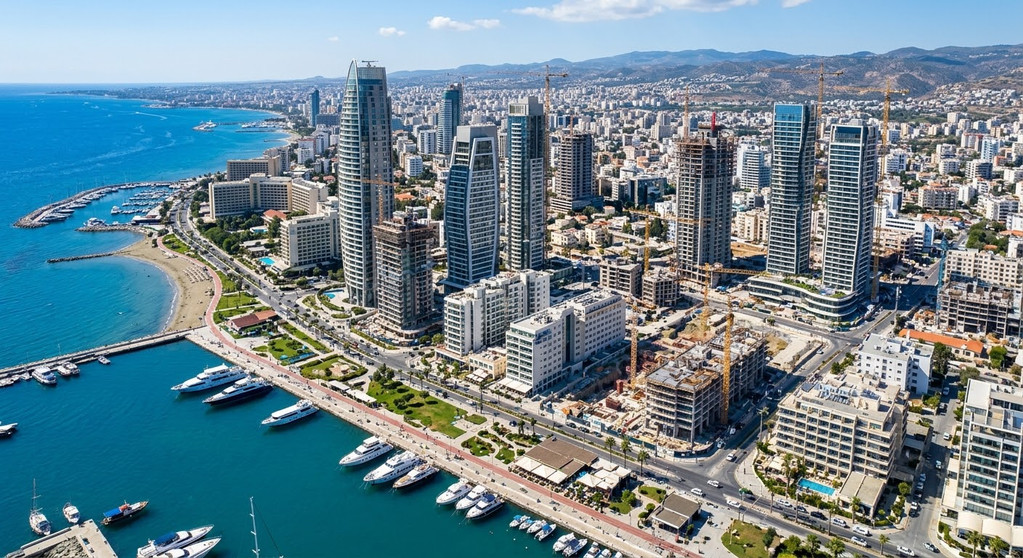
Cyprus is one of the most attractive European Union member states for foreign nationals, with foreign residents making up over 20% of the total population. The dominant community varies significantly depending on the context: permanent residence, investment, or labor.
1. Major Communities by Sector and Impact
A. Investment & Business: The Russian Community (and more recently Ukrainian/Belarusian)
The Russian community has been the most prominent and influential in Cyprus’s economy and society since the 1990s.
- Concentration Areas: Limassol (often nicknamed “Limassolgrad”).
- Investment Volume: Billions of euros injected into luxury real estate, shipping, financial services, and tech companies.
- Socio-Economic Impact:
- Real Estate Market: Significantly drove up property prices and rental rates.
- Infrastructure & Institutions: Expansion of Russian- and English-medium private schools, Russian restaurants, and localized media outlets.
- Tech Hub Transformation: Attracted technology companies from Russia, Ukraine, and Eastern Europe, turning the island into a regional hub for startups and software development.
B. Retirement & Permanent Residence: The British Community
Driven by historical ties and the British colonial legacy in Cyprus:
- Concentration Areas: Paphos and the coastal regions.
- Primary Purpose: Retirement and residential property acquisition.
- Socio-Economic Impact:
- Widespread use of the English language and adaptation of British-influenced legal and financial frameworks.
- Boosting seasonal tourism and local healthcare service sectors.
C. Labor Market & Services: South and Southeast Asian Communities (Philippines, India, Vietnam, Bangladesh, Nepal)
- Sectors: Hospitality and tourism, construction, domestic care, and agriculture.
- Impact: They form the operational backbone of the service and tourism sectors, helping bridge severe shortages in the local labor force.
D. New Investors & Regional Businesses: Israeli and Arab Communities (Lebanese and Syrian)
- Israelis: A massive influx of Israeli investors and individuals acquiring real estate and establishing residency in Larnaca, Limassol, Paphos, and Northern Cyprus.
- Lebanese and Arabs: Their presence is centered around real estate, private higher education, startups, and business management.
2. General Impact of Foreign Communities on Cypriot Society
- Economic Growth & Diversification: The Cypriot economy successfully transitioned from traditional tourism reliance to a service, tech, and real estate investment economy fueled by foreign capital inflows.
- Cultural & Linguistic Diversity: English has become a primary daily business language alongside Greek, accompanied by growing religious pluralism and international educational institutions.
- Rising Cost of Living and Housing: High demand from foreign investors has spiked property prices and rentals, presenting affordability challenges for locals and young Cypriot families.
- Workforce Multiplicity: The local economy directly relies on foreign expertise in tech and finance, alongside essential migrant labor across operational and service industries.