
Minister of Finance Yassine Jaber affirmed that the financing provided by the World Bank enables Lebanon to launch essential projects for reconstruction and infrastructure rehabilitation, given the limited investment capacity of the general budget, pointing to the start of preparations for tenders for projects to be implemented under the “LEAP” project, with initial funding of $250 million, and the possibility of total funding reaching $1 billion. He revealed that he asked the World Bank to provide a grant to support a project that allows individuals to obtain loans to install solar energy systems.
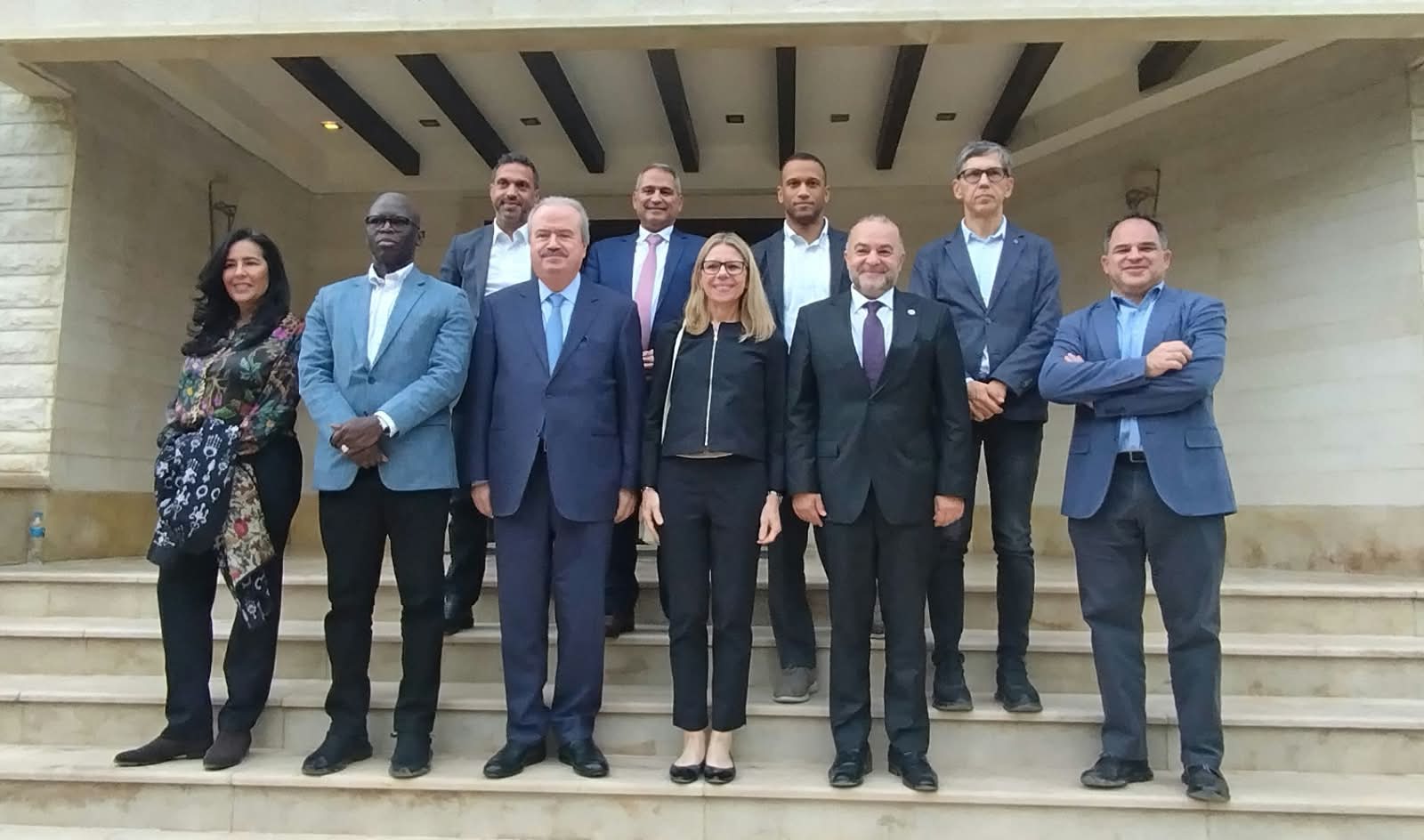
Jaber’s positions came during his reception at his home in Nabatieh of the World Bank delegation visiting Lebanon headed by Managing Director for Operations Anna Bjerde, who came to the city as part of an inspection tour conducted by the delegation in the South, away from the media, and he hosted a lunch in her honor which was an occasion to explain the southern reality as it is, and the scale of needs and priorities imposed by the conditions of the region.
Jaber explained that the high-level delegation came from Washington to inspect the situation in Lebanon on the ground, and to discuss how to start disbursing the funds needed for projects, noting that the initial funding for the “LEAP” project is allocated to infrastructure, including schools, hospitals, roads, water, electricity and telecommunications networks.
He pointed out that the loan spending is carried out through the Council for Development and Reconstruction, whose president and a number of his aides accompanied the World Bank delegation on its southern tour, noting that work has begun on tenders for projects to be implemented, in parallel with the reforms and works carried out by the Council of the South within its tasks.
He noted that the tour began early in the morning, and included the border area, the Tyre area, and areas where UNIFIL forces are deployed, where the delegation inspected a number of projects being implemented, before arriving in Nabatieh.
Jaber stressed the importance of cooperation with the World Bank, saying: “The World Bank is today the most important party that has stood by Lebanon, whether through financing reconstruction projects, or supporting the reform of the electricity sector, with $250 million allocated to the electricity grid, or the project to bring water to Greater Beirut worth $257 million, in addition to a loan for agriculture and the AMAN program which was approved recently.”
He added: “These loans help Lebanon at the current stage to implement necessary projects, at a time when the share of investment projects does not exceed 11 percent of the general budget. They allow us to do what needs to be done, despite limited available resources.”
In confirming the importance of rehabilitating infrastructure, he said: “Even if projects to produce large quantities of electricity were available, we will not be able to benefit from them to the required extent unless there are transmission networks capable of delivering this energy efficiently.”
In response to a question about the possibility of obtaining additional support, Jaber explained that he raised with the delegation, during his meeting with it the previous day, the possibility of providing a grant to support a project of loans for individuals to install solar energy systems in Lebanon, noting the possibility of seeking the assistance of the World Bank in other projects according to needs and priorities.
He concluded by thanking the World Bank for its interest and support, affirming that “its openness to helping Lebanon is something we appreciate, and we look forward to continuing this cooperation in a way that responds to the needs of the Lebanese.”