
1. What Happened?
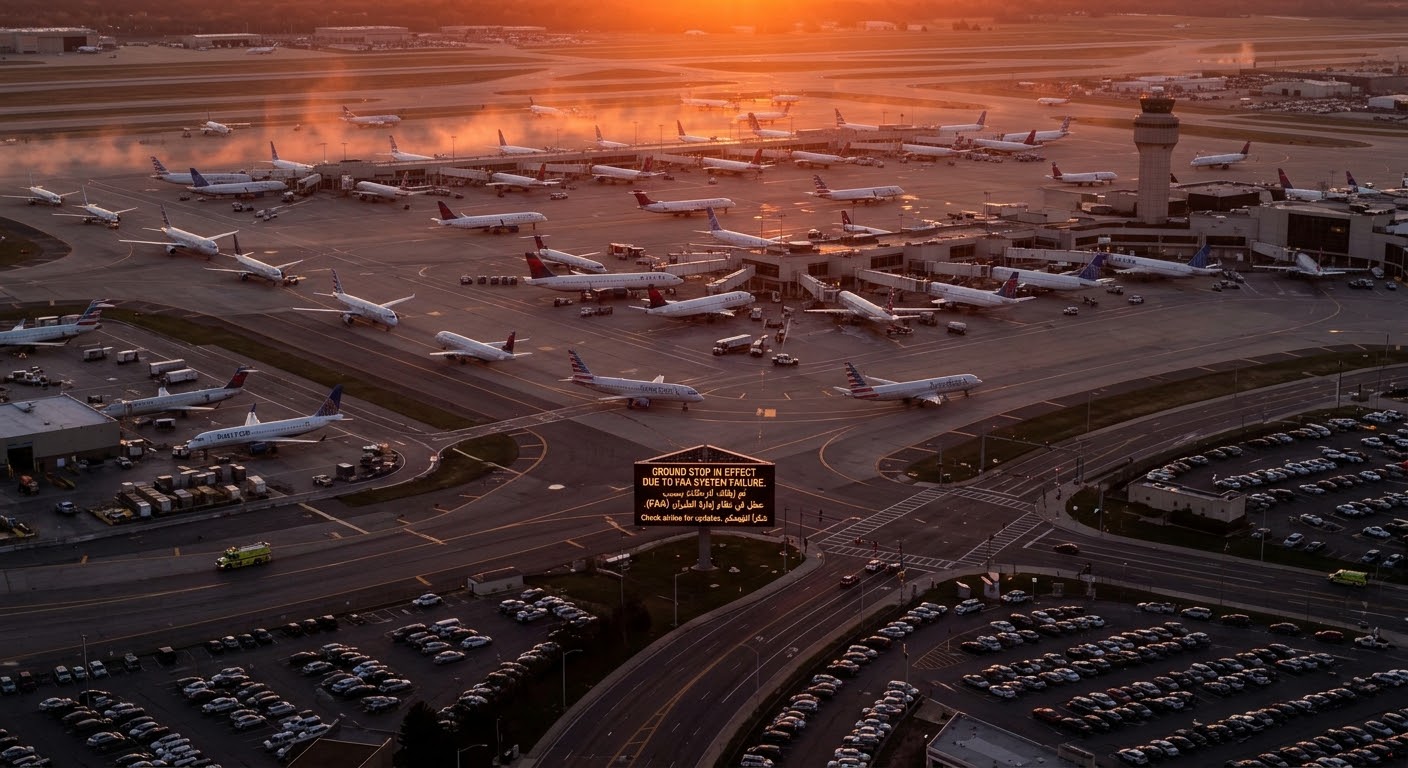
On Friday afternoon, the Federal Aviation Administration (FAA) issued a rare, nationwide ground stop for all U.S. departures. The outage caused widespread chaos across major airports in the United States, leading to thousands of flight delays and cancellations that disrupted travel for over 1.5 million passengers.
2. Causes of the Disruption
According to statements from the U.S. Department of Transportation and the FAA, the primary causes include:
- Telecommunications & Network Failure: The ground stop was triggered by a severe communication failure within the private network connecting Air Traffic Control (ATC) centers across the country.
- Legacy System Overload: Newer security software patches introduced into older network routing equipment ended up overwhelming system routers. This forced the control systems to reboot and crash, severing reliable contact between air traffic controllers and flights.
- Aging Infrastructure: U.S. Transportation officials highlighted that antiquated ATC tech infrastructure contributed significantly to the system vulnerability.
- No Cyberattack Evidence: Federal authorities explicitly stated there was no evidence of a cyberattack or malicious activity. The step was taken out of an abundance of safety to prevent any potential mid-air collisions or hazards.
3. Financial and Operational Damage
Operational Scope
- Mass Disruptions: More than 6,600 flights were cancelled and over 8,600 to 10,000 flights were severely delayed.
- Knock-On Gridlock: The 4-hour nationwide halt created a severe bottleneck, leaving aircraft and flight crews out of position for subsequent scheduled flights into the weekend.
Direct & Indirect Financial Losses
- Airline Operational Costs: Major U.S. carriers incurred tens of millions of dollars in direct losses from extra fuel burn, aircraft rerouting, gate congestion, and overtime pay for ground crew and flight crews.
- Passenger Compensation & Accommodation: Under Federal Aviation regulations, airlines must absorb heavy costs to issue refunds for cancelled flights, rebook stranded passengers, and provide meal vouchers or hotel stays for overnight delays.
- Broader Economic Impact: Delays of this scale across U.S. airspace generate hundreds of millions of dollars in indirect economic losses, affecting business travel productivity, hospitality, air cargo delivery, and local tourism.