
Antonio Al-Andari
Former Ambassador of Lebanon to the Vatican
Do Not Ask the Army to Pay the Price for the Failure of Politicians!
Between Sovereignty and Realism: What Can the Army Do?
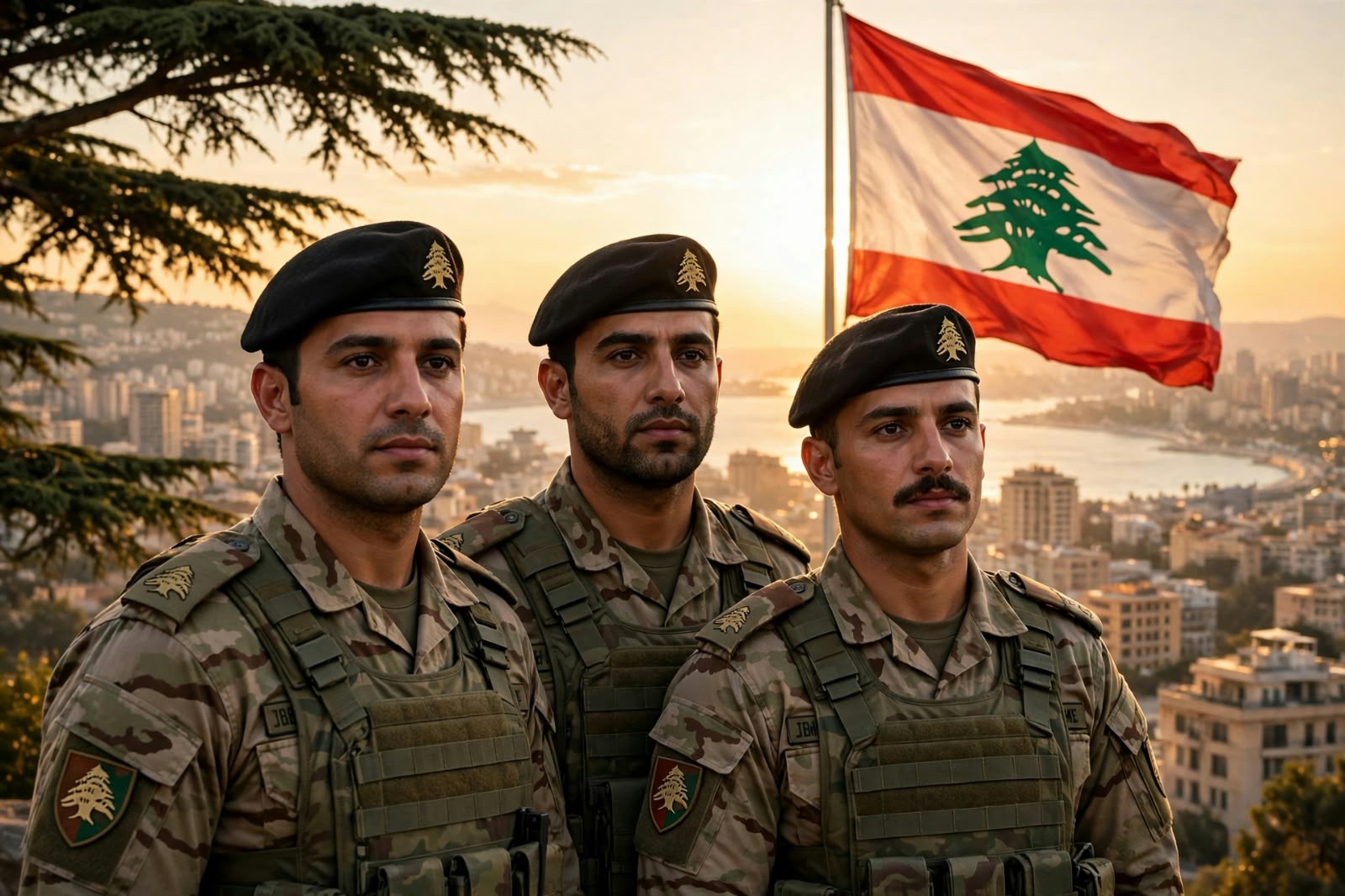
It is not fair to hold the Lebanese Army responsible for resolving all the political and security crises that the state has failed to solve. The Army is a unifying national institution. Its mission is to protect the homeland, preserve stability, and implement the decisions of the state, not to impose national consensus by military force.
The history of Lebanon’s Army commanders offers lessons worth reflecting on. From Fouad Chehab, who was careful not to drag the Army into a confrontation with a segment of the people who politically sympathized with the Nasserist wave at that time, to Iskandar Ghanem, who faced Arab pressure to prevent him from continuing his battles with the Palestinians, while a Lebanese faction sided with them against their fellow citizens, to Ibrahim Tannous, a commander who enjoyed wide affection before finding himself at the heart of the Arafatist and Assadist political and military tug-of-war that marked President Amine Gemayel’s era, and who paid the price politically and institutionally.
And each time, unfortunately, the Army found itself facing the danger of confrontation with a part of its own people, as a result of internal division and the subordination of Lebanese forces to external axes: Nasserism, Arafatism, Assadism, and today, Khomeinism.
Then we come to Joseph Aoun, who is today President of the Republic, who refused, when he was Army Commander, to drag the military institution into a confrontation with protesters, in response to a request from President Michel Aoun, preferring to protect the Army from engaging in direct clashes with the people.
Each era has its own circumstances and calculations, but the fundamental lesson is that the Army’s strength is measured not only by its military capabilities, but also by its ability to preserve its unity and its national role. The Army cannot impose on the Lebanese a political consensus they have not reached, and it must not be asked to settle disputes that exceed its powers and capabilities.
It is true that the core of the problem today lies in the weapons of the Shiite duo, Amal and Hezbollah, which have historically been linked to resistance against the Israeli occupation, without anyone ignoring the clear Iranian influence over these armed forces, and the fundamental problem this raises regarding state sovereignty and the decision of war and peace. But addressing this dilemma remains the responsibility of the state and its constitutional institutions. The Army’s task is to implement the decisions of the legitimate authority, and to apply national consensus when it is available, not to become a party to political disputes.
In this context, Lebanon must not remain an open arena for kidnappings, assassinations, transporting explosives, and settling scores, or for suspicious groups moving between the districts of Koura and Bcharre or other areas amid secrecy and the absence of any official clarification or accountability. The citizen must not feel that his security is hostage to the balance of power or that the law is applied selectively. What is required is for the state to fully reclaim its responsibility for security, and to impose the authority of the law on everyone without exception.
Here a question emerges that cannot be ignored: Where has the decision to make the capital Beirut a weapons-free city gone? Was it a serious decision capable of implementation, or did it remain a political announcement without follow-up? Implementing this decision firmly and transparently could constitute the first test of the state’s seriousness in extending its authority, and a starting point for gradually extending the experience to other Lebanese regions.
From this standpoint, the government can begin by creating model zones, outside the scope of Hezbollah’s armed control, where the authority of the law is fully applied, in parallel with an actual development plan that includes road safety, securing water and electricity, and monitoring commodity prices. Restoring state authority is not limited to security and weapons; it must be accompanied by a tangible developmental and service presence through which the citizen feels that the state protects him and cares for his affairs. This experience could constitute a practical model that can be generalized to all Lebanese territory.
As for General Heikal, he has all respect for what the position of Army Commander represents in terms of precise national responsibility at this difficult stage. It is natural that the challenges he faces are extremely complex, and that they impose on him precise and sensitive positions. However, I believe it is in the interest of the military institution that its leadership remain at an equal distance from all political forces, and avoid entering into polemics or positions that could be interpreted as political alignment. The role of the Army Commander, above all, is to preserve the unity of the institution and the trust of all Lebanese in it, and to leave political choices to the constitutional institutions.
The responsibility of the President of the Republic and the Government is to take clear political decisions, to secure national and institutional cover for the Army, and not to leave it alone facing choices that have not been politically settled. The Army leadership must not become a substitute for political decision, nor bear the consequences of governmental hesitation and incapacity.
Be realistic: Do not ask the Army to impose what politics has failed to agree upon, and do not leave it to pay the price for the division of the Lebanese. What is required is a state that decides, a government that assumes its responsibilities, and an army that implements and protects, leading to a homeland where no authority is above the authority of the law.
V
By Antonio Al-Andari, Former Ambassador of Lebanon to the Vatican