
Jaber During Meeting with EBRD: Reform Is the Gateway to Recovery, and an IMF Program Opens the Door to Wider Financing
Finance Minister Yassin Jaber affirmed that Lebanon is moving forward on a path of fiscal discipline toward a program with the International Monetary Fund that would open the door to wider financing and private investment.
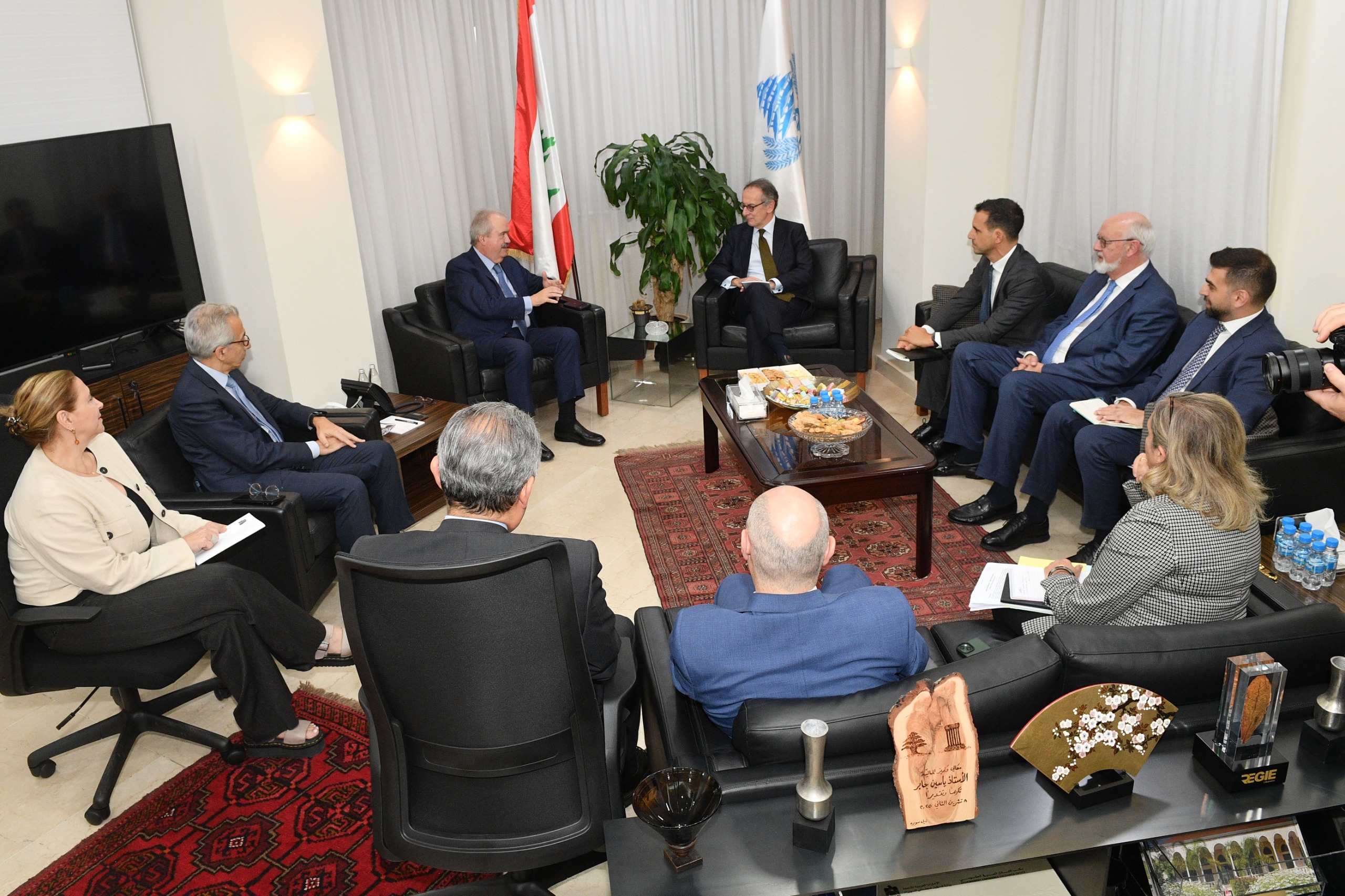
His remarks came during a meeting he held with Minister of Economy and Trade Amer Bisat and a delegation from the European Bank for Reconstruction and Development (EBRD), dedicated to discussing the path of economic recovery and opportunities to finance the electricity transmission network, expand the port, and support the private sector in Lebanon.
Minister Jaber said: “Reform is the gateway to recovery. We are proceeding with fiscal discipline toward a program with the International Monetary Fund that opens the door to wider financing and private investment, and we appreciate the partnership of the European Bank for Reconstruction and Development in the private sector, energy, and infrastructure in Lebanon.”
The Bank’s delegation explained that it has allocated between $50 and $60 million for Lebanon for development purposes, and that expanding the scope of its operations is linked to Lebanon reaching a program with the IMF, while its current activity is limited to providing advisory services and trade facilitation.
Electricity File
In the electricity file, participants discussed the possibility of financing electricity transmission networks with an initial amount of $50 million, to connect decentralized solar energy production facilities to the national grid and reduce the cost of electricity.
The delegation presented the green energy financing mechanism, under which the Bank provides loans to banks to finance projects, while donors provide a 15% cash incentive upon project completion. The investment multiplier of this mechanism is sixfold.
Trade and Port Expansion
The discussion addressed opportunities to revitalize trade and enhance integration between regional economies, in light of estimates indicating that this integration could raise GDP by at least 2%.
In this context, participants discussed the possibility of expanding the port to raise its capacity to three million containers annually, and a tender to select a private sector operator to build new silos. The Bank had previously provided technical assistance in silo management in cooperation with the Food and Agriculture Organization of the United Nations (FAO).
Private Sector
On the private sector front, the delegation presented opportunities the Bank is studying, including providing advisory services to a company working in the field of artificial intelligence, with the possibility of later investing in its capital. It indicated that the Bank is preparing to complete a deal with one of the microfinance institutions next February.
Participants also discussed a proposal to establish a fund that invests in other funds and focuses on the Lebanese market, with advice from the International Finance Corporation.
The meeting, held at the Ministry of Finance, was attended by Director General of Public Finance Georges Maarawi and advisors Samir Hammoud, Zeina Kassem, and Claudine Karki. The Bank’s delegation included Board member John Nicolaisen, Vice President for Banking and member of the Executive Committee Matteo Patrone, and Head of the Bank’s operations in Lebanon Alessandro Vitadini, accompanied by a technical team from the Bank.
Short version for Facebook:
💰 Jaber to EBRD: Reform Is the Gateway to Recovery
Finance Minister Yassin Jaber confirmed during a meeting with the European Bank for Reconstruction and Development that Lebanon is moving toward fiscal discipline and an IMF program that opens the door to wider financing and private investment.
The EBRD has allocated $50-60 million for Lebanon for development purposes, and expanding its operations is linked to an agreement with the IMF.
Discussions covered:
- $50M initial financing for electricity transmission networks to connect solar energy to the national grid
- Expanding the port to 3 million containers per year
- Building new silos with a private operator
- Supporting the private sector, AI, and microfinance
#