
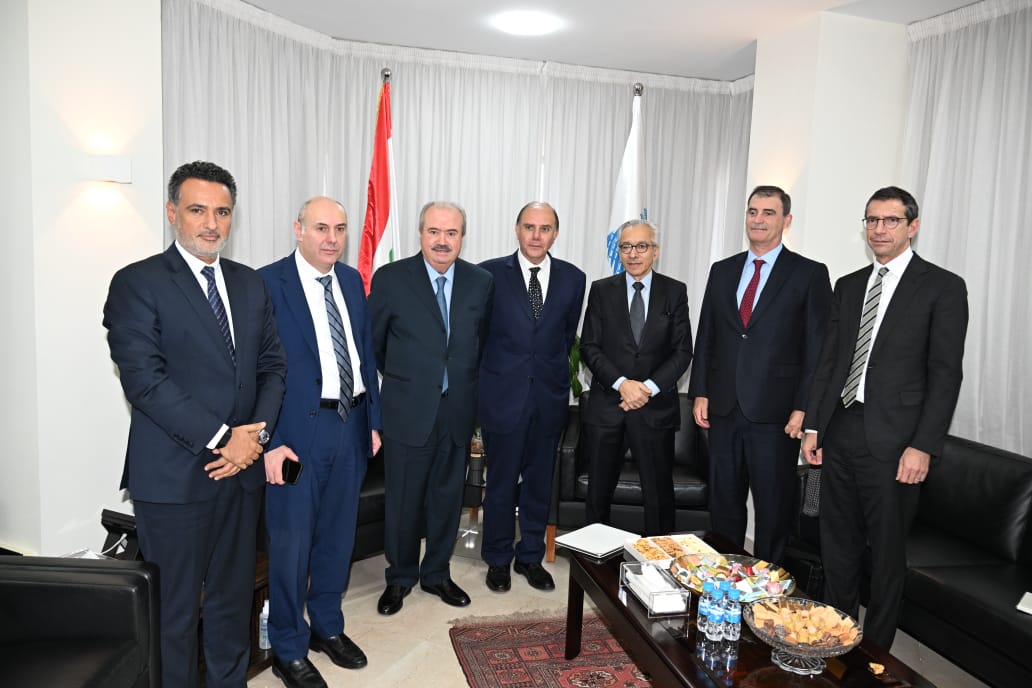
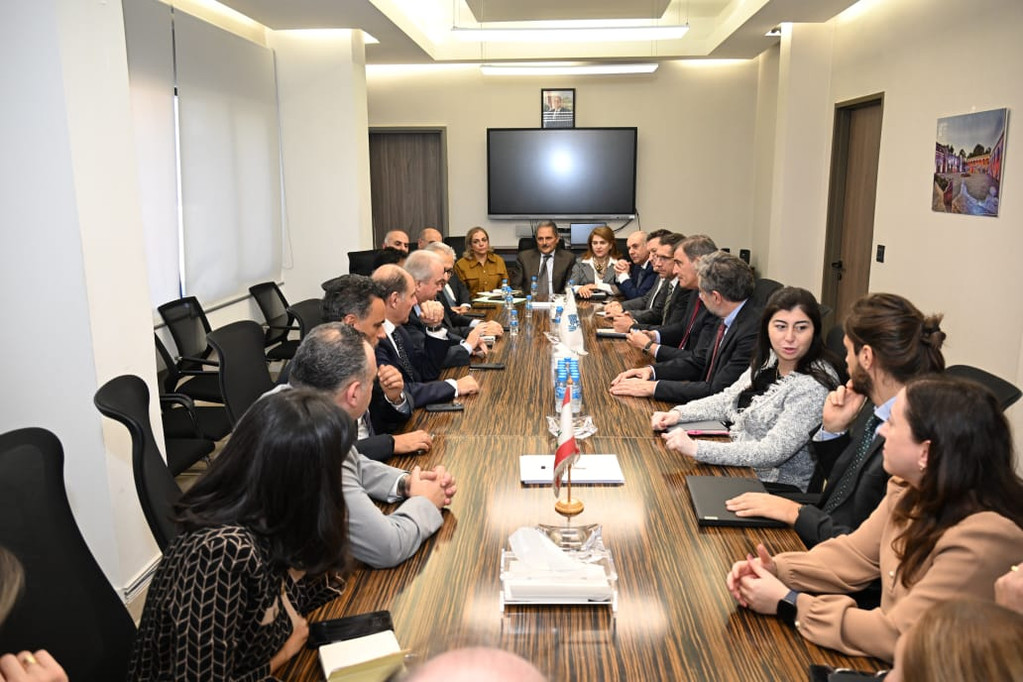
Minister of Finance Yassine Jaber, heading the Lebanese negotiating delegation, concluded a round of talks with the International Monetary Fund mission, with the participation of Minister of Economy and Trade Amer Bisat, Governor of Banque du Liban Karim Said, Director General of Finance Georges Maarawi, and representatives of the concerned Lebanese authorities from the Presidency of the Republic and the Government and specialized experts.
The meetings discussed the draft Financial Gap Law and ways to address the banking crisis and restore depositors’ funds.
After the meeting, Jaber stated that the talks had made progress in narrowing the differences between the various parties, amid discussions characterized by frankness and mutual understanding, stressing that efforts are focused on addressing the banking default that has continued for seven years. He quoted the head of the IMF mission as describing the Lebanese situation as an unprecedented case of a banking crisis that has remained untreated for all this time.
He announced agreement on forming a small committee to follow up on the meetings, with the aim of completing the required formulas before the end of the year, and going to Parliament with a unified position and a unified formula that helps pass the Financial Gap Law, expressing his hope to have a law ready for implementation before next March.
He also expressed his aspiration to make progress allowing reaching an agreement on a program with the IMF and signing it during the first quarter of next year, and by its end at the latest. He pointed out that the Fund will issue a statement on the results of the talks, likely to be issued this afternoon after a technical delay related to email correspondence.
Jaber thanked the Minister of Economy and Trade for his participation and efforts, and the Governor of Banque du Liban, his deputies and the working team for their cooperation, noting that the Central Bank provides the basic figures and accounts on which the discussion is based, especially with regard to financial capabilities and repayment capacity.
In response to a question about how deposits will be returned, Jaber explained that details are still being worked on, stressing that the treatment is based on two main objectives: restoring banking activity in a way that supports economic development and enhances confidence in banks, and starting to return depositors’ funds.
He said that a vast majority of depositors, possibly up to about 90 percent, will be able to obtain their funds in cash or in “fresh” dollars, during the first phase, while the treatment of the remaining deposits includes bonds issued by Banque du Liban to be repaid in later stages. He stressed that the discussion focuses on ensuring the law is implementable and that the necessary funds are available.
On the distribution of losses, Jaber reiterated the hierarchy he had previously announced, saying: first the State, then Banque du Liban, then the banks, and finally the depositors, and confirmed that most depositors will recover all their funds, with differences in deadlines and repayment mechanisms, noting that paying all funds to all depositors at once is not possible in light of what Lebanon has witnessed.
In response to a question about amounts previously withdrawn by depositors at exchange rates lower than the actual dollar rate, Jaber pointed to the difficulty of addressing all previous losses, stressing that the treatment will be within the limits of the capabilities available to the State and Banque du Liban.
For his part, Minister of Economy and Trade Amer Bisat described the discussions as very positive, pointing to progress and agreement at the principle level, and moving to discuss the technical details necessary to complete the treatment.
He explained that the topics that need further work have become clear, and that the small committee will complete them, in parallel with providing the required data to the IMF, seeking to finish the details before the end of the year and complete the legislative formula to present it to Parliament.
Bisat indicated that the committee includes three parties: the Government represented by its experts and with the participation of the concerned ministers when needed, Banque du Liban represented by the Governor and his team, and the International Monetary Fund.